
Advertising infrastructure is becoming AI-native, moving beyond experimentation as AI becomes embedded across production, measurement, creative and campaign workflows, according to The Wall Street Journal.
After attending Cannes, The WSJ’s Suzanne Vranica notes AI’s impact including:
- Hershey reducing ad production from 6 weeks to hours.
- Marketing measurement shrinking from 20 weeks to one month.
- Pinterest choosing the best creative automatically.
- TikTok generating creative.
- Rocket using AI throughout creative development.
Read: “Madison Avenue Is Going All In on AI” (June 29) – The Wall Street Journal (subscription)
Early days
The article closes with an “early days” reminder: “Brands are currently testing ads on platforms like ChatGPT, partly using experimental budgets, said Kate Scott-Dawkins, WPP Media’s global president of business intelligence. She doesn’t expect any decline in traditional search ad revenue until 2029.”
LLMs & CHATBOTS
Developments
- Governor Newsom announces partnership, providing Anthropic tools to state agencies and improving services for Californians (June 29) – Governor Gavin Newsom on CA[dot]gov
- “Sen. Mark Warner is planning to unveil a bill focused on AI agents as soon as today. The discussion draft would address issues of interoperability and privacy (…)” – The Information’s Leo Schwartz on LinkedIn
- The People Who Will Thrive in the AI Age (June 28) – David Brooks in The Atlantic
PLATFORMS
Comcast bets on focus
Comcast announced plans to separate into two publicly-traded companies with “Comcast” retaining its broadband, wireless and business services operations while “NBCUniversal” becomes an independent media and entertainment company encompassing NBC, Peacock, Universal Studios, theme parks and Sky.
Comcast said about the separation in a press release:
“Each organization will continue to be led by a management team with deep industry experience that will benefit from focused strategic priorities and the ability to pursue opportunities most relevant to their businesses.”
Read:
- Comcast Announces Plans to Separate Media and Technology Businesses into Two Leading Public Companies (June 29) – Comcast
- Comcast Splitting Again, Will Spin NBCU Into Its Own Public Company (June 29) – MediaPost
From tipsheet: One question to watch is where Universal Ads — which is built on FreeWheel technology — ultimately lands after the separation. Comcast has not publicly disclosed its future ownership.
Regardless of where Universal Ads lands, its launch last year reflects a broader shift: advertising platforms are becoming as strategic as premium content.
Related: “‘NBCU will become M&A target eventually. Netflix would likely have interest in the studio,’ said Ross Benes, senior analyst at eMarketer.” (June 29) – LinkedIn
CONNECTED TV
Signal: CTV’s mobile moment
As part of its Cannes presence last week, Fox-owned Tubi, a FAST (Free Ad-Supported Streaming Television) service, hosted AppLovin CEO Adam Foroughi for an on-stage discussion titled, “Why CTV is the Next Performance Ads Platform.”
What was the last performance advertising platform? Mobile, argues Tubi’s CPO/CTO Mike Bidgoli, who interviewed Foroughi on stage.
Given Fox’s pending acquisition of Roku and Tubi’s FAST model, AppLovin’s appearance is notable. If AppLovin wants to become a major force in CTV, its performance advertising model will need to translate from mobile to television, and Fox’s combined footprint across Tubi and Roku could provide a compelling proving ground.
Bidgoli said on LinkedIn yesterday:
“Adam and I were last on a stage together in 2014, when mobile advertising was at a major inflection point and Adam was in the early days of building AppLovin with that thesis. It was interesting to come back together now as Connected TV advertising is going through a similar moment. We discussed how performance CTV is developing across two areas: outcome-driven brand advertising and lower-funnel performance marketing.”
Read more. (June 29)
Meanwhile, AppLovin acquired streaming infrastructure company Wurl in 2022. Today, Wurl’s Global FAST Pass helps publishers launch channels, expand distribution and monetize FAST inventory through centralized data and services.
Roku and Walmart’s Vizio are among the client companies featured on Wurl’s product page.
Related: “Roku Chose Distribution Over Experience. Fox Paid $22 Billion for It.” (June 29) – Trey Titone on Marketecture’s Ad Tech Explained
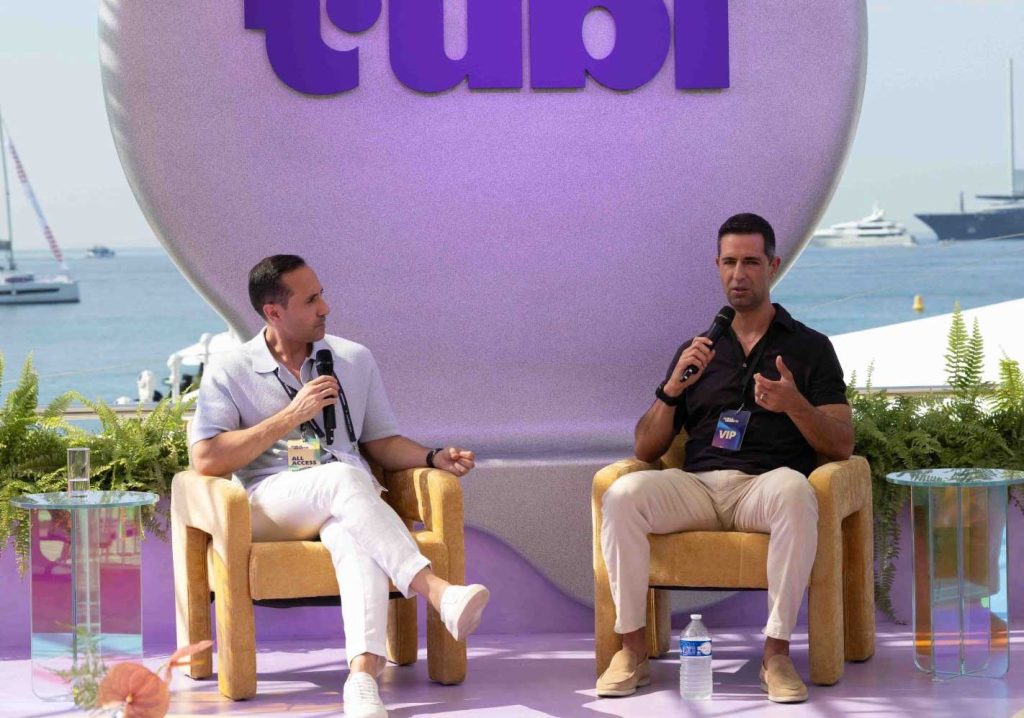
Tubi’s Mike Bidgoli (left) and AppLovin’s Adam Foroughi at Cannes.
AGENTS
On intermediaries and agentic infrastructure
As the architecture for agentic advertising takes shape, some industry participants are questioning whether it will reduce complexity—or simply recreate the intermediary layers that emerged in programmatic advertising.
Ryan Maynard, SVP of sales at sell-side ad management company Raptive, outlines several potential friction points, including:
“Many companies will attempt to operate both buyer and sales agents within their own ecosystems.
This is where the economics become particularly important. Whoever controls settlement, reporting and payment flows may ultimately wield more influence than whoever builds the sales agent itself.
Platforms like Scope3, PubMatic, Magnite, TripleLift and others will want to act as clearinghouses, collecting spend from buyers and agencies and distributing payments to sales agents and publishers.
Ask them how they plan to support third-party sales agents and avoid supply-path biases.”
Read: “Agentic Advertising Isn’t Reducing Intermediaries. It’s Just Rebuilding Them” (June 29) – Ryan Maynard on AdExchanger
Parsing the differences: SSP vs. sell-side agent
A sell-side platform provides the infrastructure to manage advertising transactions including workflows, forecasting, identity, reporting, billing and marketplace access.
A sell-side agent goes a step further by autonomously representing the publisher’s commercial interests such as making decisions, negotiating with buyers and maximizing the publisher’s outcomes.
AGENTS
From tipsheet: A framework for control points
Ryan Maynard’s op-ed raises a broader question about AI-enabled advertising markets. AI may automate workflows, but markets still need coordination.
This suggests one framework for evaluating AI-enabled advertising markets: identify the coordination functions and the companies competing to provide them.
The framework identifies several strategic control points:
- Marketplace – Where can transactions occur? Provides the venue where buyers and sellers meet. Today — SSPs, exchanges; Tomorrow — agent marketplaces or agent networks.
- Allocation – Where should demand go? Decides which publisher, platform, or opportunity receives the next dollar.
- Intelligence – How are decisions made? Provides the models that plan, predict, negotiate, and optimize.
- Workflow – How is work initiated? Becomes the interface through which humans and agents express intent and manage work.
- Protocol – How do participants communicate? Defines interoperability, standards, and the rules of engagement. So IAB Tech Lab, Prebid, AgenticAdvertising[dot]org and so on.
- Identity & Trust – Who can be trusted? Verifies participants, permissions, credentials, provenance and reputation.
- Settlement – How is value exchanged? Handles contracts, payments, reporting, reconciliation and financial flows. (Maynard’s point. Think of it as the “Visa” of agentic advertising.)
Which companies will emerge as the primary providers of these control points?
Will each function support multiple competing providers?
How will other companies plug into those providers?
Which control points become open and which become proprietary?
The answers will shape the next generation of AI-enabled advertising infrastructure.
AGENTS
“Scaled agents” coming second-half 2026
Jonathan Moffie, Head of Agentic, Magnite on LinkedIn yesterday:
-
“The agentic era is still early. Guardrails and human oversight matters a lot as both sides of the market get more comfortable with agentic transaction rails. But live campaigns are here, budgets are scaling, and the second half of 2026 is going to be a race to make agents real, scaled, and driving outcomes.”
Read more on LinkedIn. (June 29)
MORE
- Takeaways from Walmart’s Vibe[dot]co Deal (June 29) – Ari Paparo on Marketecture
- Agentic AI, or Agentic BS (June 29) – Adweek (subscription)
- Rokt mParticle Launches Performance Engine, Led by Audience Agent (June 25) – press release
- The holdco tech heads expound on the ups and downs of building AI (June 29) – Digiday (subscription)
- Alibaba’s Bid2X and the foundation model era for digital advertising (June 29) – Eric Seufert on Mobile Dev Memo (subscription)