
Scope3, launched in 2022 to help marketers measure advertising’s carbon emissions, is rebranding as Apostra and making agentic advertising its primary focus. CEO Brian O’Kelley told Adweek the platform is already handling roughly $1.2 million in media buys across several markets, and he expects agentic revenue to overtake sustainability revenue within a year.
Scope3 helped create Ad Context Protocol (AdCP), an open standard for agents to communicate about advertising that launched in October 2025. Apostra is the commercial platform built on that protocol, connecting advertisers’ briefs with media companies’ offerings.
According to Business Insider, Apostra positions itself as a neutral gateway. Rather than take transaction fees or a percentage of media spend, it plans to sell add-on “intelligence capabilities” such as campaign proposal evaluation, negotiation support, catalog integration and currency handling.
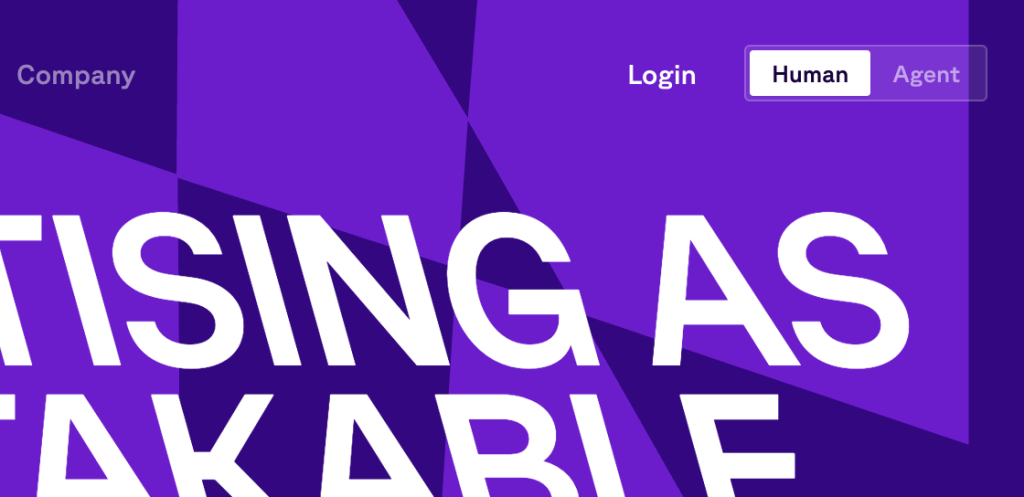
“Brands need agents that can understand their intent. But agents need somewhere to go,” the company says. Apostra has a dedicated page for agents, alongside its main site. (The Human / Agent split echoes how agentic advertising platform Mobian presents its capabilities on its website. A trend in the making?)
O’Kelley also offered a 6-minute Apostra buzz video with co-founder and COO Anne Coghlan on LinkedIn. See it.
From tipsheet: Scope3’s work on AdCP showed its agentic turn was underway before the rebrand. Apostra puts a name and a business model around that work. The test now is whether customers will pay for the intelligence layer around media buying.
Read:
- “Scope3’s Rebrand to Apostra Solidifies Shift from Sustainability to AI” (Sept. 23) – Adweek (subscription)
- “Adtech vet Brian O’Kelley’s startup is pivoting to AI agents and rebranding with a new name” – Business Insider (subscription)
Also:
COMMERCE MEDIA
YouTube brings conversational shopping to video
YouTube is expanding its GenAI-powered Ask YouTube to help viewers research products across videos.
Spinning out of yesterday’s YouTube Made On event, YouTube VP, Product Management, Viewer Products, Johanna Voolich explained that a search for reviews may produce organized video recommendations, including a comparison table of product attributes tailored to the viewer’s preferences. Viewers can then ask follow-up questions on a video’s watch page. YouTube also plans to support voice questions while watching on TV.
Separately, LLM-powered “Custom Feeds” will let viewers save home page tabs for specific interests. Voolich says the feature is coming soon to web, mobile and TVs in the U.S.
Read:
- “Dive in and discover what’s next on YouTube with our latest viewer features” (Sept. 23) – YouTube blog
- “YouTube’s Custom Feeds Give You More Control Over the Algorithm” (Sept. 23) – Wired (subscription)
From tipsheet: The shopping shift is the ability to move from watching a creator’s review to comparing options and asking questions without leaving YouTube. That gives YouTube a more direct role in the decision between discovery and purchase.
Related:
- AI storytelling, dubbing: “New YouTube Live tools for fan funding, dubbing and more” (Sept. 23) – YouTube blog
- Neal Mohan speaks: “Innovation for the YouTube Era: What’s New for Viewers and Creators” (Sept. 23) – Neal Mohan, CEO, YouTube on LinkedIn
PLATFORMS
Google gives advertisers a clearer view of AI Max
Google is expanding the closed beta of AI Brief (announced in April) to seven more languages, letting advertisers guide AI Max for Search campaigns with plain-language instructions about their business, audience and messaging.
A new Google Ads report will connect the search terms that triggered an ad with the creative assets a user saw and the landing page they reached. That gives advertisers a way to inspect how AI Max assembled the path from query to site visit. Google says it will share availability details later this year.
AI Brief is also planned for Performance Max and AI Max for Shopping.
Read: “We’re bringing AI Brief to more languages and adding a new AI Max reporting feature.” – Google Ads & Commerce blog
From tipsheet: Advertisers have long complained that AI-driven campaigns are hard to inspect. Google is addressing both sides of that problem: AI Brief lets marketers tell the system what they want, while the new report will show how it connected a search to an ad and landing page.
MEASUREMENT
Haus brings an agent to MMM decisions
AI-powered incrementality platform Haus has made its Architect marketing agent available to enterprise customers using its Causal MMM.
Architect recommends changes to media investment, shows the evidence and confidence behind each recommendation, then evaluates the impact after a marketer acts.
“It’s actually useful and helps businesses make real, consequential decisions – in a way you can finally explain,” Haus founder and CEO Zach Epstein wrote on LinkedIn Monday.
Haus reports a 10.5% pooled lift from budget recommendations in pilot engagements.
Read: “Haus’ Architect Turns Causal MMM Into an Agentic Marketing Decision System” (Sept. 21) – press release
More: “Can An AI Agent Make Budget Decisions You’d Bet Your Business On?” (July 3) – Zach Epstein on Haus’s blog
From tipsheet: MMM is moving from a report marketers interpret to a system that proposes the next budget decision and learns from the result. Feed the loop, baby.
PEOPLE MOVES
Cadent taps Lisa Utzschneider as interim CEO
Novacap-owned Cadent has appointed Lisa Utzschneider interim CEO and board chair, effective immediately, as Nick Troiano begins transitioning out after more than a decade in the role. Troiano will serve as a strategic adviser while the board searches for a permanent successor.
Utzschneider led Integral Ad Science through its $1.9 billion sale to Novacap last year.
On LinkedIn, Utzschneider said in part, “In the near term, I’ll be focused on listening, learning and working closely with the Board and Cadent leadership team to support our employees, keep delivering for customers and partners and help maintain momentum as the search for a permanent CEO moves forward.” Read more. (Sept. 23)
Read: Cadent Announces Leadership Transition to Support Company’s Growth Strategy (Sept. 23) – Cadent blog
From tipsheet: With Cadent and IAS both in Novacap’s portfolio, Utzschneider’s appointment raises the question of whether the firm might bring IAS’s verification and measurement business closer to Cadent’s converged TV and digital platform. In our Inside the Auction reconstruction, we identified IAS/Novacap as DoubleVerify’s final rival bidder. Its $14.50-per-share offer lost to Nielsen’s signed $13.60 deal, which DoubleVerify’s board viewed as more certain to close.
AGENCIES
WPP making moves
- WPP opens London hub in bid to produce faster, AI-assisted ads (Sept. 22) – Reuters
- DoorDash names WPP Media its first global media partner (Sept. 22) – Ad Age (subscription)
- WPP Lands Nestle Content Development Assignment For Greater China (Sept. 22) – MediaPost
AGENTS
Opinion: Not everything needs an agent
IAB Tech Lab CEO Anthony Katsur on LinkedIn:
“I’m bullish on agentic AI, but not everything needs an agent.
Let AI handle ambiguity, reasoning, discovery and complex workflows. Let deterministic software handle what it already does extremely well: predictable execution.”
Read more. (Sept. 23)
Also: “The Hybrid Advantage: Getting Value Out Of Agentic AI Means Knowing When Not To Use It” (Sept. 23) – Anthony Katsur, CEO, IAB Tech Lab on AdExchanger
CONNECTED TV
Pitching the CTV publisher ad server
Momentiv CEO and co-founder Sandro Catanzaro on LinkedIn:
“Our thesis is that CTV ad serving was overdue for a rebuild, incorporating real-time decisioning at the core, and finally fixing identity, forecasting and pacing. AI took our thesis from theory to practice, by letting us code at warp speed, and moving the line on which companies can be built. But AI’s biggest impact is in changing processes…”
Read more. (Sept. 23)
Listen: Rebuilding the CTV Ad Server: Momentiv’s Sandro Catanzaro (Sept. 9) – The Aperiam Podcast
LLMs & CHATBOTS
Developments
- Claude discovers a novel enzyme system with CRISPR-like repeats (Sept. 23) – Anthropic
- Gemini 3.8 text-to-speech says hello (Sept. 23) – Google
- The World is Changing: AI For Creativity (Sept. 23) – Jeffrey Katzenberg on X
MORE
- AI and TV: Mike Shields asks whether fragmented inventory and slow buying workflows will keep TV out of automated, outcomes-driven ad buying. (Sept. 22) – Next in Media
- ChatGPT Ads: A 365-day cookie lifespan is drawing attention, but it isn’t a 365-day conversion attribution window – Marketecture’s Ari Paparo sets the record straight on X
- Speed the infra: “RTB Fabric now supports configurable Availability Zone affinity for responder gateways.” (Sept. 22) – Matt Yanchyshyn, VP, AWS Marketplace & Partner Services on LinkedIn
- GEO study: “New Technology: The Projected Total Economic Impact™ Of Bluefish.” – Forrester Consulting (sponsored)
- Licensing: “What The New York Times looks for in AI licensing partnerships” (Sept. 23) – Digiday (subscription)