
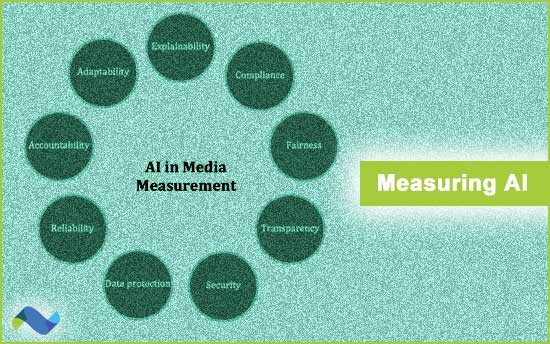
Industry standards body Media Rating Council has published interim guidance on the use of AI in media measurement.
The guidance emphasizes principles including transparency, explainability, accountability, fairness, security, and privacy, while identifying additional work needed around AI and identity, invalid traffic, brand safety, auctions, and cross-media measurement.
MRC emphasizes that the document is only a starting point. Among the six areas identified for future guidance is the use of AI in media buying:
“Transparency in AI buying systems (auctions and seller operated buying agents)
-
- Disclosure requirements for areas or processes where AI is used in auction environments, including the use of Agentic AI (if applicable, and not captured through the Auction Transparency Standard)
- Risks related to algorithmic collusion, algorithmic poisoning, and cold start issues
- Blackbox placements”
Media Rating Council says the effort is “expected to be completed in phases throughout 2026 and early 2027.”
Read: “MRC Guidance on Existing Standards for AI Use in Media Measurement” (July 8) – Media Ratings Council (PDF)
More: “MRC Issues ‘Interim’ Guidance On AI In Media Measurement” (July 8) – MediaPost
From tipsheet: “Black box placements” is an intriguing phrase. Is the MRC signaling a new measurement category, or a push to make AI-driven buying systems less opaque?
Either way, AI measurement is moving from experimentation toward governance. Rather than creating separate AI standards, the MRC is beginning to incorporate AI into the industry’s existing measurement framework, signaling that AI is becoming part of the infrastructure rather than a standalone capability.
LLMs & CHATBOTS
Developments
- Introducing GPT‑Live (July 8) – OpenAI
- The AI Superfans Companies Count On to Convert the Skeptics (June 8) – The Wall Street Journal (subscription)
- Mistral launches a vision-language model for robot navigation (June 8) – Mistral blog
PLATFORMS
Meta standardizes AI provenance
Meta is expanding disclosures for AI-generated advertising, requiring advertisers to tag images, video and audio created or significantly edited with generative AI.
Social Media Today reports:
“Meta has updated the labels for Facebook and Instagram ads that include artificial intelligence-generated content, in order to ensure that these notes align with the company’s recent updates to its general ad disclosure listings. (…) Now, Facebook and IG ads that have been created using AI tools will include a disclosure element in their ‘About this’ ad element, which users can access by tapping the three-dot menu on any promoted post.”
The company also says it can detect AI-generated assets from third-party tools using methods including C2PA metadata and may apply labels even when advertisers do not disclose them.
Read:
- “Meta adds updated disclosure tags for AI-generated ads” (July 7) – Social Media Today
- “About AI info on ads created or edited with generative AI tools” (undated) – Meta
Related: “Our Approach to Labeling AI-Generated Content and Manipulated Media” (April 2024) – Meta
From tipsheet: AI-generated content has provenance. Meta’s disclosure labels attach standardized provenance to creative assets, preserving information about how ads were created as structured metadata. While the immediate goal is transparency, that provenance also becomes a signal that supports governance, trust and, over time, richer optimization.
LLMs & CHATBOTS
ChatGPT Ads get Custom Audiences
OpenAI rolled out its Custom Audiences product for ChatGPT Ads, explaining that the new audiences aren’t exactly retargeting.
Instead, custom audiences are applied as “audience-level controls.” The company is careful to point out that “Ads Manager does not show individual matched users or let you select specific people from an audience.”
For preparing the audience file for upload, OpenAI recommends:
- “Prepare a CSV or TXT file up to 500 MB.”
- “Uploads can contain up to 5,000,000 identifiers.”
- “Use one identifier type per upload.”
- “TXT files must include one identifier per line.”
- “CSV files can include a header row or no header. If you use a header, the columns must be named: email, phone_number, email_sha256, or phone_number_sha256.”
- “Custom audiences cannot be edited after creation. To change an audience list, create a new audience and archive the old one.”
Read: Set up Custom Audiences for your Campaign (July 6) – OpenAI
From tipsheet: OpenAI calls these “audience-level controls,” not retargeting. The distinction may matter less technically than socially. AI assistants may occupy a more trusted position than traditional advertising platforms, though it’s still unclear whether consumers will make that distinction.
Also of note: OpenAI requires at least 25,000 “matched users” for a Custom Audience. Advertisers can’t upload a single email address, or even a small list, to target a specific person or a lookalike based on that individual.
SEARCH
AI drives creator discovery
ChatGPT and Claude aren’t just sending traffic. According to Adweek, they’re also sending business, with some creators seeing more inbound brand opportunities after being recommended by AI assistants.
Adweek’s Trishla Ostwal reports:
“A fashion creator, Polo gave an interview with HealthCentral last Fall, documenting his experience with eczema. Since then, he has been surfacing in ChatGPT and Claude responses to queries like ‘who are the top eczema creators’ or ‘which content creators post about fashion and their experience with eczema.’
Inbound brand inquiries have since climbed 50%, with skincare brands…”
Read: “These Creators Are Hacking ChatGPT To Rake In Brand Deals” (July 8 ) – Adweek
From tipsheet: This isn’t just an unlock for creators. There’s a lesson here for larger publishers, too. AI assistants make topical credibility more valuable. Creators and publishers that consistently document authentic expertise around specific subjects become easier for AI to recommend, increasing their value to brands.
MARKETING
Vrbo marketers 3-5x more efficient with AI
On Ad Age’s The Marketer’s Brief podcast, Vrbo says it’s using booking data to identify emerging travel corridors and quickly shift media and messaging toward destinations gaining momentum. Meanwhile, AI helps the company rapidly update creative for digital campaigns to reflect changing booking trends.
Helen Melluish, VP of marketing at Vrbo, describes how the company is approaching AI overall:
“I don’t know if it has fully changed our output yet. It has clearly changed everyone’s inputs and clearly changed ways of working. I would say everyone on my team would probably say that they are three to five times more efficient today. Something that would have taken you maybe days to complete takes you an hour or two. There’s been a big push for us to make sure everyone feels empowered and comfortable to use AI.
That’s, I think, for a marketer, been maybe our first challenge—for any marketing team or actually for any individual in marketing today—to allow yourself to leverage the tools and not see this as a potential threat, but actually an opportunity.”
Read: “How Vrbo uses data, local messaging and AI to keep summer travel on track” (July 8) – Ad Age
From tipsheet: As AI automates routine marketing work, the marketer’s role shifts toward prioritization, experimentation and strategic judgment. Competitive advantage comes less from producing assets and more from deciding what to create and where to deploy it.
COMMERCE MEDIA
Pacvue prepares retail media for AI
Pacvue, which is positioning itself as a “Commerce Media Operating System,” announced a new partnership with Ace Hardware’s retail media network, RedVest Media, which will be enabled by Pacvue’s integration with Publicis-owned Epsilon.
A press release notes the fit for brands who want to reach home improvement consumers with benefits that include
“Activate RedVest Media campaigns seamlessly alongside Amazon, Walmart, and other retailers from a single platform
Connect Ace Hardware performance to a unified reporting view, with cross-retailer dashboards that make it easier to compare results, identify trends, and roll up performance across the full portfolio
Apply automation and rules-based optimization to RedVest Media campaigns, including bid management and budget pacing
Eliminate the operational overhead of managing Ace as a standalone channel, reducing manual work and giving teams more time to act on insights rather than compile them”
Ace Hardware launched RedVest Media last August.
Read: “Pacvue and Ace Hardware Announce Partnership to Bring RedVest Media Into Pacvue’s Commerce Operating System” (July 7) – Pacvue
From tipsheet: If commerce operating systems connect performance across retail media networks, they give AI a unified view for planning, optimizing, and automating campaigns across retailers. Those feedback loops become more valuable as commerce operating systems connect retail media with the rest of the marketing stack.
Related: Pacvue Launches Pacvue Prism, Powering the Industry’s First Agentic Commerce Grid (June 23) – Pacvue
MEASUREMENT
Selecting the “prompt portfolio”
As marketers build AI optimization and measurement strategies, Josh Blyskal at AI visibility (or GEO or AEO or AI marketing platform) firm Profound argued on LinkedIn yesterday that the quality of the “prompt portfolio” matters more than repeatedly running the same prompts.
Blyskal concluded:
“If your prompt portfolio is too narrow, too branded, too top-of-funnel, too bottom-of-funnel, or just not representative of how buyers actually ask questions, running it 10x/day will give you highly precise but wholly inaccurate data.
AEO teams need to treat prompt selection with the same seriousness that search teams treat keyword research, gotta remember that the prompt portfolio decides what “visibility” actually means.
I wonder how many AI visibility debates are actually prompt selection debates.”
Profound’s data also suggests that repeatedly running the same prompts produces diminishing returns.
Read more. (July 8)
From tipsheet: Prompt selection becomes the diagnostic. AI visibility is a function of the prompts used to evaluate it. As with SEO keyword research, the prompt portfolio defines the market being measured.
Related: “ChatGPT citations change when hidden search pipelines switch” (July 8) – Search Engine Land
TECH
AI productivity versus ‘Spam Factory’
Chris Kane, founder of Jounce Media, spoke to AdExchanger regarding his company’s research which has been used to combat made-for-advertising (MFA) websites:
- “We make a huge mistake as an industry if we start to say that all AI-generated content is bad. There’s a difference between using generative AI technologies to augment the productivity or the research process versus creating a spam factory, which is automatically publishing hundreds of articles every day.”
Read: “MFA Ad Spend Is Increasing. Is AI Slop To Blame?” (July 8) – AdExchanger
More:
-
“ANA Programmatic Transparency Benchmark Reveals Widening Gap Between Top and Bottom Advertisers” (May 27) – ANA
-
“Programmatic Transparency Benchmark Q1 2026 Findings” – ANA (PDF)
TECH
Opinions
- Why Does the Middle of the Funnel Always Get the Middle Finger? (July 8) – Andrew Lipsman on his Media, Ads + Commerce Substack
- Meta’s Muse moat: integration into Advantage+ (July 8) – Eric Seufert on Mobile Dev Memo (subscription)
- Trading Margin for Intelligence (July 8) – Adam Epstein, CEO, Gigi on Gigi blog
- A Script for Mark Zuckerberg (July 7) – Ben Thompson on Stratechery
MORE
- Integral Ad Science’s New CEO Dishes on Her Plans for the Company (July 8) – Adweek (subscription)
- IAB Europe’s AdEx Benchmark 2025 Report: European Digital Advertising Market Records 10.5% Growth to Reach €131 Billion (July 7) – IAB Europe
- Announcing the Monetization Gateway: charge for any resource behind Cloudflare via x402 (July 1) – Cloudflare
- Adobe Advertising Just Launched Its Own Custom Algorithms Product (July 8) – AdExchanger