

Meta is talking to TV manufacturers and free ad-supported streaming platforms about adding an “extend to CTV” option to its existing ad-buying platform, Mike Shields reports. That would let Facebook and Instagram advertisers buy streaming TV ads from other companies through the same interface they already use.
Read “Breaking Down Meta’s Coming Two-Front War on TV” (Nov. 17) – Mike Shields on his Next in Media Substack
The talks give some context to a recent Meta job posting for a “Strategic Partner Manager, Connected TV.” One of the responsibilities is building partnerships that bring in CTV ad inventory.
From tipsheet: If Meta can match a streaming ad to a purchase, will its model learn which shows help sell the product, or just which households are likely to buy? Feed that loop!
DATA
The website AI gets to see
Knotch’s new “Ace for Agents” website management solution lets brands show AI crawlers a version of a webpage that shoppers never see, AdExchanger’s Joanna Gerber reports. A brand could, for example, add a favorable third-party review to the crawler’s version. The ad agency Digitas has been testing it for several months.
Gerber explains how Knotch identifies crawlers, citing chief customer officer Andrew Bolton:
“Most LLM crawlers declare themselves when they access a webpage, so Knotch knows to show them the AI version of a page, said Bolton. For those that don’t declare, Ace can analyze actions like on-site behavior to determine that the viewer is a bot.
AI agents, unlike humans, don’t care about interactive features or aesthetically pleasing graphics. Instead, their focus is on brevity and direct statements.”
Read “Websites Aren’t Just For People Anymore. Here’s How Marketers Optimize Them For Agents” (Nov. 17) – AdExchanger
From tipsheet: This is GEO/AEO on the brand’s own website.
TECH
The Trade Desk on Trusted Server
After Apple’s Safari began blocking domains used for identity resolution in September, IAB Tech Lab pitched its Trusted Server project as a way for publishers to move ad functions from the browser to their own infrastructure. Read tipsheet (Oct. 21).
Now The Trade Desk’s Mike O’Sullivan and Ian Meyers are proposing updates to Trusted Server that borrow cryptographic techniques from The Trade Desk’s OpenAds auction.
Their proposal would give buyers a way to verify individual bid requests:
“Trusted Server tells buyers a publisher’s code came from the initiative. We propose an independent administrator, signed bid requests and continuous monitoring, so that trust holds at the level of each bid request.”
Read: “A Trusted – and Verified – Server” (Nov. 10) — Sincera, owned by The Trade Desk
COMMERCE MEDIA
Agentic shopping without borders
European fashion retailer Zalando plans to let customers buy from other online retailers without leaving its app, Reuters reports. In a pilot with home furnishings retailer Westwing, Zalando already shows Westwing’s products in its search results. For now, shoppers click through to Westwing to buy. Zalando plans to add AI-assisted checkout to its app in 2027.
Read: “Retailer Zalando launches AI shopping agent as margins squeezed” (Nov. 3) – Reuters
More: “Is Zalando’s New AI Agent a Blueprint for the Future of Retail?” (Nov. 17) – Vogue Business
From tipsheet: Retailers have a reason to build shopping agents of their own: keeping the customer relationship even when another retailer has the product. Google’s Universal Cart brings purchases from multiple retailers into one place.
Both point toward the same competition: who becomes the place shoppers start? There’s plenty of sweet intent and transaction data at stake.
SELL-SIDE
Debates: Pooled vs. Custom Bidding
Adam Heimlich argues that when bidding models prize the same users, advertisers pile into the same auctions, leaving much of a publisher’s inventory with little demand. He makes the case for training bidding models on each advertiser’s own data so the same page can be worth more to one brand than another. (That’s also the business of Chalice AI, where he’s CEO.)
Read: “Platforms Pick 7, Part 2: The Publisher’s Side” (Nov. 17) – Adam Loves AdTech
DATA
When assistant data becomes ad data
You give Google Search access to Gmail to help plan a trip. Should those travel details also shape the ads you see?
That’s the issue Alan Chapell raises in his latest Regulatory Insider. He argues that AI assistants are opening up new uses for personal data, including messages that were previously “walled off from secondary use.” Google offers a concrete example: its privacy policy says Search can use some of the data you choose to share from Gmail, Drive or Photos to personalize ads.
Read “Chapell Regulatory Insider” (Nov. 16) – Legal consultant Alan Chapell on his Substack
CREATIVE
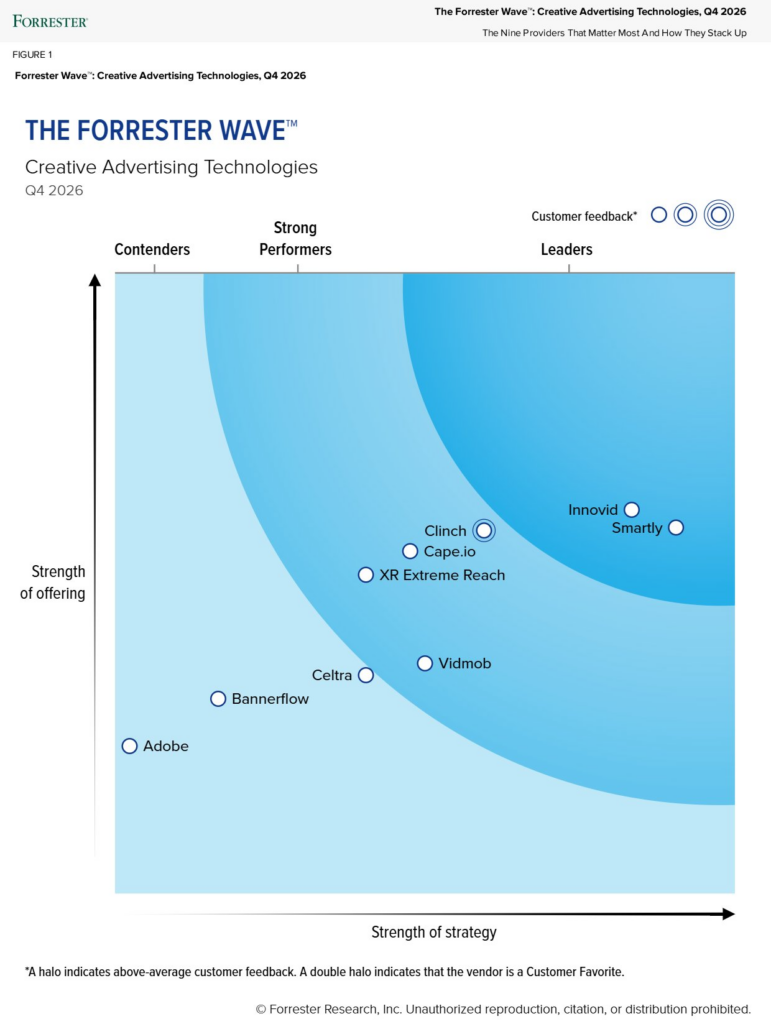
Forrester rates creative ad tech
Among submissions to Forrester Research’s Q4 review of creative ad tech, Mediaocean’s Innovid and Smartly were out front, according to the research firm.
Mediaocean CMO Aaron Goldman shared the results on X yesterday:
OUT-OF-HOME
Patent: The in-person landing page
A newly published Disney patent application describes using AI to generate virtual environments based on real-time feeds and user inputs — potentially connecting what happens in a physical theme park with what visitors experience digitally.
On Disney-focused news site WDW News Today, Arica Conrad reports: “A digital theme park could be updated automatically when physical parades begin, fireworks light up, or crowd wait times spike.”
Read: “Disney Patent Filing Outlines AI Virtual Theme Park That Mirrors Real-Life Parades, Fireworks, and Wait Times” (Nov. 14) – WDW News Today
From tipsheet: What if this is the landing page of the future? Arrive at a Disney store or theme park, and you could be met by a digital environment that adapts to your interests, responds to your actions and changes with real-world conditions. You experience it through an app, augmented reality glasses, interactive displays or the brain implant you received last Thursday.
LLMs & CHATBOTS
Developments
MORE
-
- Results: “Disney Quarterly Ad Sales +10%, Streaming +19%” (Nov. 17) – MediaPost
- Open Measurement: “Credit where it’s due: The next era of advertising accountability” (Nov. 17) – Brian Mandelbaum, CEO, Attain on The Current, a The Trade Desk publication
- AI discovery: Northwestern marketing professors Jim Lecinski and Kelly Cutler update Lecinski’s “Zero Moment of Truth” for AI assistants that build shopping shortlists (Nov. 17) on Adweek
- AI economics: “Tokenomics And The AI Cost Paradox” (Nov. 17) – Analyst Tracy Woo on Forrester Research blog