
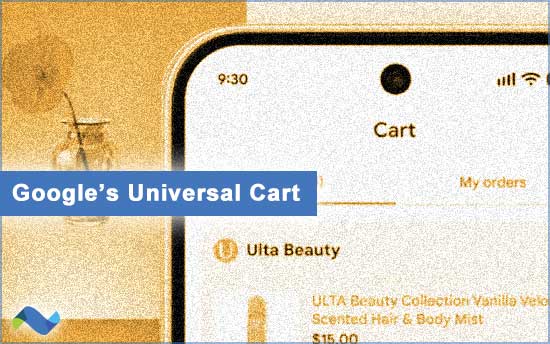
Google is rolling out Universal Cart in the U.S., giving shoppers one place to save products from multiple retailers across Search and the Gemini app, track price drops and complete purchases.
On LinkedIn yesterday, Google Advertising & Commerce VP/GM Vidhya Srinivasan explained:
“At I/O we introduced the Universal Cart, an intelligent shopping cart and new hub for shopping on Google. It helps people save items they love from multiple retailers across the web, make sure they never miss a deal, and enjoy effortless checkout powered by UCP…
We’re also publishing our first ever ‘When to Buy’ Guide. (PDF) It helps people shop smarter, based on last year’s promotional patterns, search trends, and discount data across U.S. merchants on Google.”
‘When To Buy’ Guide tl;dr — Black Friday weekend with exceptions.
Read more. (Oct. 15)
Suresh Ganapathy, Senior Director, Product Management at Google, detailed how the cart connects several parts of Google’s commerce stack:
-
- its Shopping Graph supplies product and inventory information;
- Google Wallet helps identify credit card perks;
- and the Universal Commerce Protocol (UCP) powers checkout.
Google says the cart can also surface promo codes and send back-in-stock alerts.
Shoppers can check out with Google Pay at participating retailers or transfer items to a merchant’s cart to finish on its site. Either way, the merchant remains the seller of record and handles confirmations and customer support. Participating retailers include Nike, Sephora, Target, Ulta Beauty, Walmart, Wayfair and many Shopify merchants.
Read:
From tipsheet #1: How long until ads in the cart?
The seeds may have already been planted. Back at NRF in January, Google rolled out ‘Direct Offers’ for Google Search’s AI Mode which “effectively integrates coupons (my word) as a form of advertising and incentive in the chatbot environment.” Read tipsheet. (Jan. 2026)
Universal Cart could give Google another place to surface those offers, though the announcement doesn’t mention ads.
And could Amazon’s participation in UCP eventually give its ad business a role in these shopping journeys? A cross-retailer cart could create demand for sponsored offers and complementary product recommendations. Who sells those placements — and collects the revenue — is an open question.
From tipsheet #2: Shopper-in-charge commerce.
Google explicitly distinguishes Universal Cart from agents that shop on your behalf. Here, shoppers make the decisions as Google connects discovery, savings and checkout while retailers keep the transaction relationship — and Google gets a reason for shoppers to return to Search or Gemini even after they’ve found what they want.
CAREERS
Anthropic loves ads, pass it on
Job: Podcast Media Manager – Anthropic
-
-
“You’ll sit on the influencer marketing team and partner closely with growth marketing on performance goals and in-house campaigns, brand marketing on major campaign flights, enterprise marketing on B2B buys and scripts…”
-
PLATFORMS
Meta gives brands new ways to buy attention
Meta is introducing new ways for brands to buy concentrated reach and prominent ad placements across its AI-driven feeds, while testing a different approach to measuring and optimizing video exposure.
At its Brand Building Summit yesterday in New York City, Meta announced:
- “We are launching Ads Super Burst, a new way for advertisers and agencies to build brand awareness through short, highly concentrated campaigns.”
- “We’re testing First Impression Ads, providing a chance to be the very first ad someone sees when they open the Facebook app.”
- “Reels Trending Ads continues to expand as a product with a lineup of new topics, and advertisers using the product are seeing a lift of more than five percentage points in action intent and unaided brand awareness.”
- “We’re also testing a new way to measure and optimize short form videos, looking at an aggregated view of how much time someone spends with your brand, as opposed to looking at single video views.”
Read: “Meta Brand Building Summit: New Ways to Help Marketers Build Unforgettable Brands on Meta” (Oct. 15) – Meta
Super Burst lets advertisers reserve a three- to 24-hour window around a launch, sale or cultural event, with category exclusivity available. Tests reached a median of 34 million people per flight. General availability begins this month in phases.
First Impression Ads is an early U.S. test offering one brand per day the first ad position in Facebook Feed.
The measurement test, Aggregated View Time, is in alpha. It measures and optimizes total time spent viewing a brand’s ads across a week. Meta says its research found five seconds accumulated over a week drove 32% more offline sales than one continuous five-second view.
From tipsheet: Meta’s AI recommendation systems help determine what people watch. These products give advertisers new ways to buy attention around it: concentrated reach, first position and adjacency to trending Reels. Aggregated View Time lets Meta optimize for those brief exposures together, rather than treating each impression separately.
Related: “Meta’s Generative Ads Model (GEM): Scaling the Central Model and Compute Engine for Frontier Ads AI” (Oct. 13) – Meta Engineering blog
CONNECTED TV
Fox takes agents into linear TV buying
Media giant Fox is moving the agentic advertising platform it introduced in June into live linear TV transactions with more agency partners, Fox ad sales chief Jeff Collins tells Adweek.
Digital transactions are planned, too, and the company sees a larger role for agents in future upfront buying.
Read: “Fox Expands Agentic Push With Eyes Set On TV Upfront Future” (Oct. 15) – Adweek
Who’s buying it?
Agency groups WPP, Omnicom, Horizon Media (through Databricks) and Stagwell are already executing agentic linear transactions for live campaigns, according to the press release.
When requested inventory is unavailable, Fox’s agent can recommend alternatives based on the advertiser’s target audience. Fox and agency teams retain control over key decisions.
Cross-channel TV ad platform Simulmedia is also executing transactions. CEO Dave Morgan describes the potential:
“What Fox has pioneered here with their true agentic transaction architecture has enormous consequences for the media world. For the first time in TV history, advertisers and agencies can optimize their linear TV ad campaigns like digital, with automated, agent-to-agent negotiations at the spot, schedule, flight and target-level mid-campaign based on advertisers’ closed loop outcome data such as web visits, app downloads, phone calls, purchases online or in-store or real-time trends in search, social or on AI answer engines.”
Read: “Fox AdStudio Advances to Next Phase as Leading Agency Partners Put Agentic Advertising Into Action” (Oct. 15) – press release
Fox’s technology push this year has included:
-
- April: Fox announced AI-native data platform Fox AdStudio, which connects brands to Fox audiences and powers its linear TV agentic ad platform. More here.
- June: Fox agreed to buy Roku.
- Shortly thereafter: Fox unveiled what it called TV’s “First End-to-End Agentic Ad Platform.”
From tipsheet: The expansion into linear TV brings agents further into negotiated media buying. The upfront ambitions suggest Fox sees a role for them in the annual planning and commitment process, too.
Meanwhile, another step closer: “Fox’s $22 Billion Roku Deal Approved by Shareholders of Both Companies” (Oct. 14) – Variety
DATA
Chime is making data creative with AI
Chime’s in-house AI marketing operation offers a look at how customer data platforms are expanding into creative execution, according to Ad Age.
Ad Age’s senior editor of technology and AI, Garett Sloane, previews his piece on LinkedIn:
“Chime has no creative agency on retainer. It has an ‘AI Factory’ instead.
I asked Chime’s Chief Growth Officer and CMO Vineet Mehra how the fintech brand brought its marketing in-house. What tools does it rely on? And what does an AI-powered marketing operation actually look like?
Mehra walked Ad Age through the stack, and some of the tools are taking on surprising new roles.
- Project Apollo is Chime’s name for the operation. Hightouch, once primarily a data platform, is now integral to creative execution, helping Chime build thousands of ad variants.”
GEO and creator tactics make an appearance in the strategy stack, too. Read more. (Oct. 15)
Sloane reports that Chime’s marketing team remained at roughly 100 people as the company grew to 9.5 million active members and nearly $2.19 billion in annual revenue.
Read: “AI tools for marketing—how Chime brings research, creative and media in-house” (Oct. 15) – Ad Age (subscription)
From tipsheet: In-housing is here. Again!
First it was programmatic. Now it’s AI.
With a data platform helping create ads, Chime is bringing audience strategy and creative execution closer together inside the brand, potentially shortening the path from customer insight to a live campaign.
Speed the marketing.
LLMs & CHATBOTS
OpenAI builds its ad sales machine
OpenAI is building the sales organization behind its growing advertising business, hiring dozens of staff and expanding its efforts to recruit smaller advertisers, according to The Information’s Alix Coutures.
Nearly half of the roughly 140 employees working on ads joined between July and September, according to employee data firm Crustdata. Meta is the biggest source of talent.
OpenAI’s VP of global ad solutions, Dave Dugan (formerly of Meta), told The Information:
“We’re building the fastest-growing ads business in the world, and we’re hiring from a diverse range of companies across the industry, with no single company focus. That breadth of talent keeps us shipping at pace and [turning] advertiser feedback into better products.”
The sales operation now includes industry-specific groups and a dedicated agency team. OpenAI is also using TP, Concentrix and Accenture to sell ads and help smaller advertisers set up campaigns.
Lower click costs are helping attract spending. One agency reported a $5 CPC on ChatGPT versus $30–$50 on Google for the same business software clients. As previously reported, advertiser numbers reached about 60,000 in early October, up from 20,000 in late August, according to New Street Research’s Dan Salmon.
There are growing pains: The Information reports that ad-team reorganizations have averaged nearly one a month (seven total) since ChatGPT Ads’ February launch, while advertisers complain about limited visibility into the conversations triggering their ads.
Read: “OpenAI Accelerates Ad Sprint With Meta Hires, Slashed Prices” (Oct. 15) – The Information (subscription)
From tipsheet: A $1 billion annualized ad revenue run rate by late August is a remarkable start for a business launched in February.
What could the next milestones look like?
-
- Video ads, then CTV? Could OpenAI eventually extend its advertising business into streaming video? Start with the expansion of an existing app such as the Tubi app in ChatGPT?
- More access to business audiences? Could ads reach more subscription tiers, paired with targeting that helps B2B advertisers reach relevant professionals?
- Beyond ChatGPT? Could OpenAI extend its ad business (Business Insider in July) to other apps and websites?
LLMs & CHATBOTS
Developments
-
- “400 publications are now partnering with us on our News AI pilot program.” (Oct. 15) – Google
- “Excited about our new Bee devices launching today.” (Oct. 15) – Andy Jassy, CEO, Amazon on LinkedIn
- “Introducing Muse Spark Open, The Most Capable US Open‑Weight Model to Date” (Oct. 15) – Meta
MORE
-
- Podcast: “Pivot or Perish: Kargo’s Bet on AI Media Buying” (Oct. 15) – Adweek
- Affiliate publishing: “Inside Wirecutter’s push to diversify beyond affiliate revenue as AI reshapes discovery” (Oct. 15) – Digiday (subscription)
- Sourcing inventory: “Thrad Launches $1 Million Fund to Support the Next Generation of Conversational Advertising” (Oct. 15) – press release
- Measurement, controls update: “Announcing v26 of the Google Ads API” (Oct. 14) – Google Ads Developer blog