
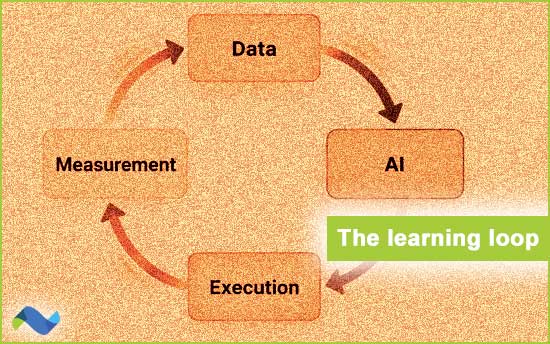
AI can make thousands of advertising decisions in minutes, but who determines whether those decisions are producing the right outcomes?
That’s the question emerging from a Meta-sponsored article in Adweek by Shekhar Deshpande, Meta’s Head of Global Clients and Agency Marketing.
Meta’s argument for agencies: When AI-driven campaign execution becomes widely available, competitive advantage shifts toward proprietary data, business context and the ability to measure outcomes and feed validated learning back into automated systems.
“Incrementality keeps the system honest,” Deshpande writes, arguing that causal experiments must anchor the measurement systems guiding AI optimization.
Read: “Measurement in the Age of AI” (October) – Adweek
Horizon Media president Bob Lord shared the article on LinkedIn, adding an important agency perspective:
“Clients need to see the impact of their investments across the entire media ecosystem. That becomes even more important as AI takes on more decisions, especially when individual platforms are measuring success through their own lenses.”
Read more. (Oct. 24)
The discussion attracted several industry perspectives.
- Trevor Testwuide, CEO of Measured, emphasized continuously feeding incrementality and contextual intelligence into AI systems.
- Sofie Sue Rutgeerts, a TV and CTV strategist, argued that agency-led incrementality testing can provide a more independent, cross-channel view of performance.
- Adam Heimlich, CEO of Chalice AI, argued for models optimized against each advertiser’s unique business goals.
From tipsheet: AI creates an opportunity for agencies and independent measurement providers to determine what autonomous advertising systems should optimize for and verify whether their decisions produce incremental business value.
Meanwhile, the tension: Platforms control execution and offer their own measurement capabilities. Advertisers have to decide how much of the learning and verification process they’re willing to leave in those same hands.
The competitive question: Who controls the feedback loop?
FINANCIALS
Earnings this week
More quarterly earnings results from publicly traded companies will be released this week, including:
- Wednesday, October 28 – Alphabet/Google
- Wednesday, October 28 – Microsoft
- Thursday, October 29 – Amazon
From tipsheet: These three behemoths have enormous cloud businesses serving the AI-enabled enterprise. Big, impressive results are almost… boring? The ever-increasing capital expenditures to support AI demand could be the real news. How big is the raise this time?
SELL-SIDE
Prebid expands beyond header bidding
Prebid[dot]js, the industry’s header bidding wrapper, is taking another step toward broader sell-side auction decisioning, adding support for ad server bids adjusted for campaign priorities and pacing.
Patrick McCann, SVP, Research at sell-side ad management firm Raptive, wrote on Saturday:
“Prebid[dot]js now understands priority or pacing adjusted bids from ad servers. While some ad servers, such as Microsoft, have bid into Prebid for a long time, this is the first time Prebid[dot]js has understood those bid types and has the ability to prioritize them.
The library is no longer just a header bidding solution and the roadmap has never been more exciting.”
More: Prebid 11.44.0 Release (Oct. 24) – Prebid on GitHub
From tipsheet: The development potentially gives publishers more control over how competing sources of demand are evaluated.
It also raises a bigger question for the sell-side decisioning trend: Where will the intelligence governing advertising transactions ultimately reside?
Among the possibilities:
- Publishers and ad servers: Publishers control yield optimization, demand prioritization and inventory allocation.
- SSPs and exchanges: Companies like Index Exchange, Magnite, PubMatic and OpenX execute decisioning closer to impressions, using real-time supply signals and models.
- Shared infrastructure: Prebid and its ecosystem could enable more standardized, interoperable decisioning that reduces dependence on proprietary platforms.
- DSPs and buy-side platforms: Companies like The Trade Desk and Amazon optimize valuation, bidding and campaign performance on behalf of advertisers.
- Independent AI orchestrators: Emerging agentic platforms could coordinate decisions across ad servers, SSPs, DSPs and other systems to achieve business objectives.
Related: “Why Programmatic RTB and Pre-Bid Is Already Obsolete” (Oct. 19) – Tom Triscari on his blog
AGENCIES
Hagedorn takes the AI lead at Publicis
Publicis has named Scott Hagedorn the first CEO of Marcel, its AI platform, as the agency holding company expands the technology beyond internal employee workflows into client-facing marketing and business services. Read more. (Oct. 22)
This is not Hagedorn’s first platform rodeo: he was CEO of Annalect, Omnicom’s data technology platform, whose businesses included the programmatic trading desk Accuen in the 2010s.
MediaPost reports Marcel will combine capabilities from Publicis Sapient, Epsilon and Lotame to connect business, customer and marketing data, with AI agents supporting decision-making across search, content, influencer marketing and other disciplines.
Read: “Publicis Expands Marcel, Taps Scott Hagedorn As First CEO” (Oct. 24) – MediaPost
From tipsheet: What will he do with LiveRamp once the acquisition closes?
AGENCIES
Omnicom defends its role in the AI era
Agency holding company Omnicom reported better-than-expected results last week.
Responding to a question about Omnicom’s role in the agentic AI era, CEO John Wren argued that its platform keeps the company central to clients’ work. CTO Paolo Yuvienco said Omnicom’s role is to orchestrate complexity on clients’ behalf.
Read: “Q3: Omnicom’s Media Business Is Growing, But Is It Agent-Proof?” (Oct. 22) – AdExchanger
More: “Omnicom Q3 2026 Earnings Call Transcript” (Oct. 22) – Yahoo Finance
PLATFORMS
AppLovin CTO explains his thinking behind Gist
Why build a social network instead of an AI assistant?
AppLovin CTO Giovanni Ge considered both before pursuing Gist, the social media app tipsheet covered in May.
Explaining his decision, Ge writes on X: “The question I kept coming back to was how to build something durable when so much of its capability depends on an underlying model you don’t own.”
Ge believes AI can dramatically lower the resources required for a small team to build a social platform. But the hardest part remains attracting a community and giving people a reason to return. Read more on X or the same post on LinkedIn. (Oct. 22)
Gist is now available on iOS and Android, although Ge says his company isn’t aggressively pursuing user acquisition for Gist — yet.
From tipsheet: One intriguing detail in Ge’s X replies: Gist’s web version is hosted on an axon[dot]ai subdomain, linking it at least at the domain level to AppLovin’s AI-enabled ad tech infrastructure. How could Gist-Axon evolve?
One more thing: Interesting timing on Ge’s posts — AppLovin’s earnings report is next week. What’s coming next from AppLovin?
OUT-OF-HOME
Outfront on agentic standards for OOH
Premesh Purayil, CTO of out-of-home firm Outfront Media, writes:
“IAB Tech Lab’s public comment window on AAMP 3.0 ran through Oct 22. The core of it is OpenProposal: a standard way for seller agents to describe inventory so buyer agents can compare proposals automatically. Instead of a planning team reviewing 10 to 20 RFP responses, an agent can read hundreds. I think that’s the right direction for OOH.”
Read more on LinkedIn. (Oct. 22)
Purayil argues that the proposed standard needs additional work to accommodate OOH inventory and buying practices.
The comment deadline has been extended to November 10. Read it.
LLMs & CHATBOTS
Developments
- Meta analytics and agents: “I am so excited that Sundial has joined Meta. Chandra Narayanan and Julie Zhuo are coming back to Meta, bringing members of their team and their AI analytics technology with them. Chandra will lead our data analytics tooling and agents work.” (Oct. 24) – Alex Schultz, Chief Data Officer, Meta on LinkedIn
- “Predictions 2027: CX Teams Build New Muscles To Seize The AI Opportunity” – Forrester blog
- More AI predictions: “Four Innovators on Work and Creativity” (Oct. 24) – The Wall Street Journal (subscription)
MORE
- Rogue agents: “Meta and Google’s AI can create ads without asking—how to guard against rogue agents” (Oct. 23) – Ad Age (subscription)
- Google DV360 API v5: Public beta adds support for digital out-of-home campaigns, expanded YouTube exclusion controls and updated inventory and audience targeting. (Oct. 22) – Google Ads Developer Blog
- Meta musings: “Meta’s Muse Is Going Gangbusters. But Where Is the Payoff?” – The Wall Street Journal (subscription)
- Regulation: “A New AI Disclosure Law from Pennsylvania. But What Does It Actually Cover?” (Oct. 23) – Law firm Loeb & Loeb blog
- Winner: “WPP retains Coca-Cola’s global media, as Omnicom takes North America” (Oct. 22) – The Drum