
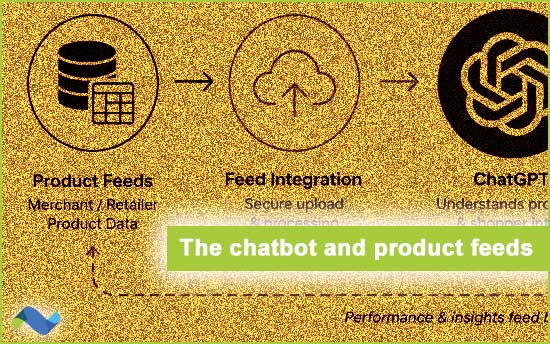
Have a product feed? Criteo and other ChatGPT ads partners are waiting.
Criteo is expanding access to ChatGPT ads as it lowers minimum spending requirements and widens eligibility for advertisers.
Ben Kahan, Head of Programmatic at independent agency Brainlabs, discussed the risk/reward on LinkedIn:
“We’re actively looking at Criteo for ChatGPT ads with a major retail client right now, and the product feed integration is a great draw.
ChatGPT just hit 1 billion monthly active users, and for retail brands with existing product feeds, plugging directly into that inventory is a compelling opportunity. That said, it’s still a black box with limited visibility, reporting delays, and less control over delivery… everything we’d expect from a platform in their state of maturity.
$10k minimums? Definitely worth a test, as long as you’re going in with eyes open!”
Read more. (June 4)
ChatGPT ads appear to be great for lead generation for retail-media focused platforms like Criteo.
An early May update said:
“Criteo builds on the foundation of ads in ChatGPT by enabling brands and agencies to plug ChatGPT into a broader, cross-channel, full-funnel commerce strategy, with the same support and optimization they already rely on today from Criteo. Early results are positive with initial indications that this new surface is resonating with brands, agencies, and shoppers.”
More: “Criteo Cuts ChatGPT Ad Minimums, Offers Incentives to Woo Retailer Brands” (June 4) – Adweek (subscription)
From tipsheet: ChatGPT ads may look like a new advertising channel, but for companies like Criteo they’re becoming another endpoint for existing commerce workflows. The battle may be less about inventory ownership and more about who controls the feeds, optimization and measurement systems that connect brands to AI-powered shopping experiences.
Related: “In Sponsored Products, one of the hardest challenges is making sure that ads match what shoppers actually mean, across millions of queries and billions of products. That is the problem we tackled with CLEPR, Criteo’s model for semantic understanding in Sponsored Products…” (June 4) – Paul Coursaux, Senior Machine Learning Engineer on LinkedIn
LLMs & CHATBOTS
Developments
- When AI builds itself (June 4) – Anthropic
- Pinterest works with AWS to power next chapter of AI-driven visual search discovery (June 4) – Pinterest
- OpenAI Embraces Retro Ads To Humanize AI Ahead Of IPO (June 4) – MediaPost
LLMs & CHATBOTS
Somebody’s wrong: Dueling AI ad forecasts
eMarketer AI analyst Nate Elliott shares a snippet of his company’s new “AI Ad Forecast 2026” which predicts $32 billion in “AI ad spend” this year.
By 2030, eMarketer believes US AI ad spend will more than double to $68.25 billion.
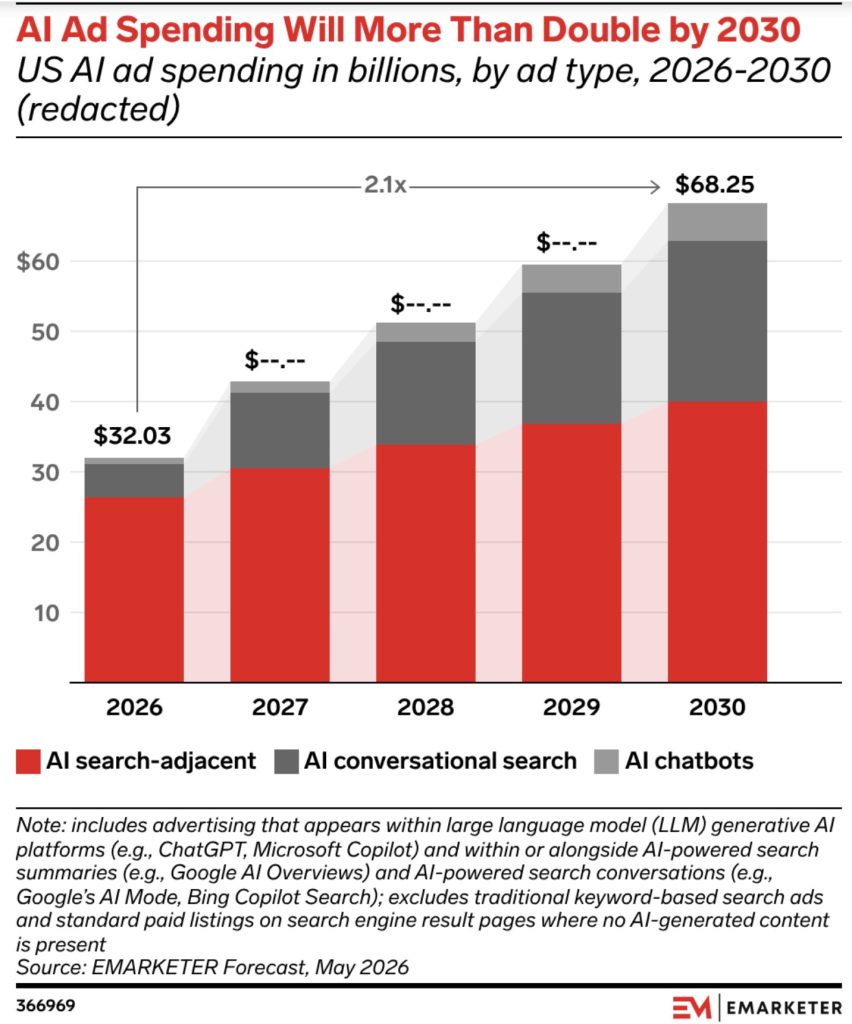
Fine print: eMarketer says the AI ad number for the U.S. reflects advertising within large language model (LLM) generative Al platforms (e.g., ChatGPT, Microsoft Copilot) and within or alongside Al-powered search summaries (e.g., Google Al Overviews) and Al-powered search conversations (e.g., Google’s Al Mode, Bing Copilot Search). But it excludes “traditional search ads and standard paid listings on search engine result pages where no Al-generated content is present.”
Read: “US AI Advertising Forecast 2026” (June 4) – eMarketer (signup required)
More: Elliott also shares a graphic showing Google’s Gemini chatbot will overtake OpenAI’s ChatGPT in unique user count by early next year (June 4) – LinkedIn (June 4)
From tipsheet: The forecast may sound impressive. But OpenAI has reportedly told investors it is targeting $100 billion in annual advertising revenue by 2030, according to Reuters (April 9) — about $32 billion more than eMarketer’s estimate for the entire U.S. AI advertising market.
TECH
Nadella: Outcome pricing is a royalty
As AI vendors experiment with outcome-based pricing, Microsoft CEO Satya Nadella offered a different way to think about it.
“Outcome-based pricing is also called royalty,” Nadella said during a Stratechery interview. “When a customer has a great outcome, they necessarily don’t want to share their outcome.” Instead, Nadella argued that enterprise software will likely evolve toward hybrid models that combine subscriptions, seats and usage-based pricing rather than pure outcome-based arrangements.
Podcast w/transcript: “An Interview with Microsoft CEO Satya Nadella About Finding Core Competencies” (June 4) – Stratechery
From tipsheet: What would advertising look like if vendors received royalties?
Nadella’s framing is notable because outcome pricing is often discussed as a natural evolution of software pricing. By describing it as a royalty, he shifts the conversation from software economics to value-sharing.
In advertising today, outcome-based compensation often takes the form of affiliate commissions, lead-generation fees or revenue-sharing arrangements. AI could push that logic further. If advertising vendors and platforms can demonstrate that their systems create measurable business value, they may seek a share of that value rather than simply charging for access to software.
Related: Meta wants to ‘run your whole business’ (June 4) – tipsheet
LLMs & CHATBOTS
Williamson: AI sees intent before ads do
On her “AI Ad Economy” Substack, analyst Debra Aho Williamson argues that AI platforms are increasingly intercepting consumer intent before traditional advertising and retail media systems have a chance to observe it.
Using her own experience researching cosmetics, Williamson describes how an Instagram ad introduced her to a product, but a conversation with ChatGPT redirected her toward an entirely different brand. The purchase ultimately happened on Amazon, but ChatGPT shaped the decision.
She writes, “Search platforms see intent. Amazon sees intent. Retailers see intent. But increasingly, AI platforms are seeing intent before any of them.”
Read: “The Signals I Sent ChatGPT (That Ads Did Not See)” (June 4) – The AI Ad Economy
From tipsheet: Incrementality measurement, right this way.
Related: The W3C Is Making A Critical Mistake About Measuring Advertising Effectiveness (June 4) – Rick Bruner, Central Control on AdExchanger
SEARCH
Google gives creators a profile
Google introduced a new profile experience for creators that’s, arguably, all about trust in Search — whether in traditional Search or AI-powered experiences. And it’s good promo for the all-important creator economy, too.
From a Google blog post:
“We’re launching Search profiles, a new way for publishers and creators to shape their presence on Search. Search profiles are a dedicated, shareable space to highlight content across platforms, and help audiences find accurate, up-to-date information about sources on Search.
Search profiles give publishers and creators a central place to showcase their latest articles, videos and social posts.”
Read: “A new profile to help publishers and creators highlight their work on Search” (June 4) – Google The Keyword blog
From tipsheet: Viewed in isolation, creator profiles look like a small Search feature.
Viewed alongside features such as Preferred Sources and Highly Cited labels, they suggest a broader effort to preserve identity, attribution and trust as AI increasingly sits between users and destinations. As AI-generated answers become more prominent, Google is looking for ways to keep the people and organizations behind the information visible.
Trust preserves retention.
GOVERNANCE
AdCP governance leaders intro framework
Leaders of Ad Context Protocol’s governance organization, AgenticAdvertising[dot]org, announced the “Unified Marketing Intelligence” (UMI) framework yesterday.
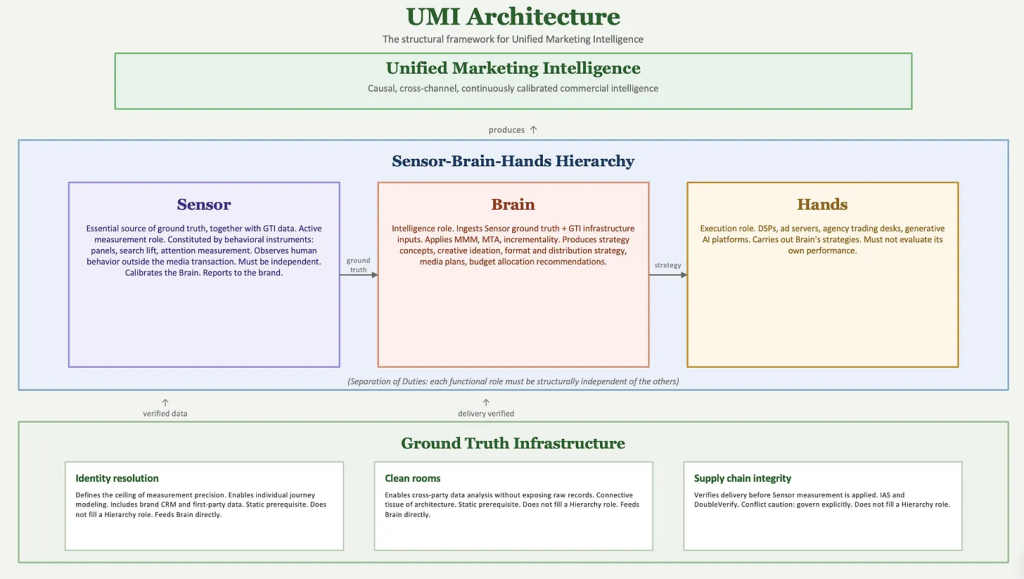
Former IAB CEO Randall Rothenberg, Matthew Egol and John Frelinghuysen argue that much of the industry’s agentic AI discussion remains overly focused on optimizing media transactions rather than transforming how marketing decisions are made. Hence the need for UMI.
They conclude:
“The hammer is a useful tool. It built the programmatic marketplace that delivered real value for two decades. But you cannot frame a house with just a hammer. When the job changes, so must the tools. UMI makes possible a marketing intelligence architecture that works for brands, strategic agencies, publishers, and tech contributors rather than for the intermediaries who have historically extracted value from them.”
Read: “The Programmatic Hammer versus The Agentic Nail” (June 4) – Winning Experience on Substack
FINANCIALS
Ad tech IPO shows strength on Day 1
Liftoff Mobile, a mobile app marketing and monetization platform backed by Blackstone, priced its IPO above its marketed range and raised $437 million Thursday.
According to Pulse 2.0
-
“Liftoff Mobile sold 19 million shares at $23 each, exceeding its previously marketed range of $20 to $22 per share. The offering values Liftoff at approximately $3.83 billion based on its outstanding shares. That valuation is lower than the roughly $4.3 billion valuation established during General Atlantic’s 2025 minority investment, but it represents a successful return to public markets following a difficult environment for software IPOs earlier this year.”
Read: Liftoff Mobile Raises $437 Million In Revived IPO (June 4) – Pulse 2.0
Liftoff’s stock price rose over 20% in its first day of trading.
From tipsheet: A successful ad tech IPO priced above range with a strong first day of trading suggests investors remain willing to back established software and advertising platforms despite ongoing uncertainty about AI’s long-term impact.
AGENTS
Agents and composability will lead, says Erwin
-
“The biggest developments will be at the intersection of Agentic AI and Composability in software development. Inside a brand who does data driven advertising, the biggest single limitation on testing, learning, and optimizing campaigns is the limited bandwidth of the people doing the work. This extends to the agencies and consultancies who serve those marketers. These are all people-driven service businesses. Agentic AI, while not quite ready for prime time applications, will enable marketers and their providers to perform vastly more work than before, at lower costs, which will result in much greater marketing effectiveness.” – Rick Erwin, CEO, Adstra
Read: “Rick Erwin of Adstra On The Future Of Adtech” (June 4) – Authority Magazine on Medium
PEOPLE MOVES
Now hiring
-
“I am thrilled to share that I’ve joined Louqman Parampath and the Roblox ads team, where I will be focused on helping scale Brand Ads! This move feels like a massive full circle moment for me because gaming has always been a core part of my life and my primary way of staying connected with people.” – Giovanni Gardelli on LinkedIn
Read: Former Yahoo DSP product executive Giovanni Gardelli joins Roblox as Head of Product (June 4) – LinkedIn
Related: Roblox Opens Up Advertising To Kids Under 13 (June 4) – AdExchanger
MORE
- Introducing the Vibe Developer Platform (June 4) – Vibe
- Opinion: “OpenAI Needs Two CMOs Because It Has a Problem Marketing Can’t Solve” (June 2) – Mark Ritson on Adweek
- Opinion: “AI is transforming advertising. Just not where it matters.” (June 4) – Marcus Startzel, CEO, GumGum on The Current