
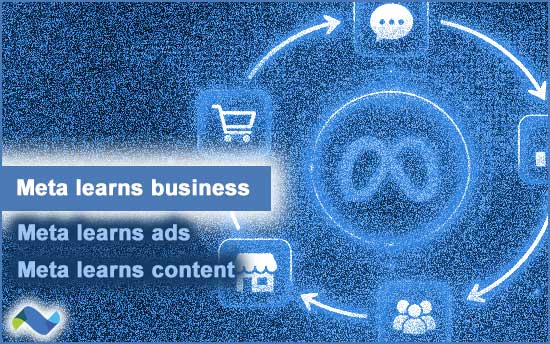
“The cool thing about having an agent that talks to your customers every day is that it learns over time. And it can bring all that context back to you. (…) As our models advance, your agent will take on more and eventually help you run your whole business.”
CEO Mark Zuckerberg said this yesterday as Meta unveiled its new Business Agent platform at Meta Conversations in London.
The launch builds on the business-agent strategy Zuckerberg outlined during Meta’s April earnings discussions and Meta’s AI-powered customer service efforts first covered by tipsheet last October.
Meta’s rollout includes four major pieces:
- Business Agent: AI agents that can answer questions, recommend products, book appointments, qualify leads and close sales.
- Business Agent Platform: Infrastructure that connects agents to systems such as Shopify and Zendesk.
- Business Discovery: New ways for customers to discover businesses through WhatsApp.
- Business Intelligence: Future capabilities including market research, product insights and competitive intelligence.
Meta says more than one million businesses in India, Mexico and Brazil have already tested the technology, and the company is now expanding access globally across WhatsApp, Instagram and Messenger.
Read:
- Be There for Every Customer With Meta Business Agent (June 3) – Meta
- Mark Zuckerberg wants Meta agents to “run your whole business” (June 3) – Engadget
From tipsheet: If Meta wants advertisers (from 2025) to simply specify their budget and objective and let Meta do the rest, Meta also wants business owners to do the same.
Zuckerberg’s remarks suggest Meta’s ambitions extend beyond customer service automation. The company is positioning agents to learn from customer interactions, surface demand signals, provide business intelligence and eventually help run business operations. The chatbot may be the entry point. The larger opportunity is turning customer conversations into a continuous learning and decisioning layer for the business.
LLMs & CHATBOTS
Developments
- 8 visual search features that help you quickly find what you’re looking for on Amazon (June 3) – Amazon
- A blueprint for democratic governance of frontier AI (June 3) – OpenAI
- Introducing Gemma 4 12B: a unified, encoder-free multimodal model (June 3) – Google The Keyword blog
AGENTS
Sell-side agent taking shape
- “InMobi Advertising is going agentic. That means buyers can access our full exchange through agent-to-agent workflows, with Glance as the clearest example of why this matters. Glance inventory was never meant to be bought through traditional programmatic pipes. Open RTB wasn’t built to express what it actually is: a premium, context-rich commerce experience. Commoditizing it into impression-level inventory undersells it for everyone involved.” – Kunal Nagpal, Chief Business Officer, InMobi on LinkedIn
Read: InMobi, Scope3 Debut Sell-Side Agent for Autonomous Media Buying (June 3) – Adweek
LLMs & CHATBOTS
Google separates AI Search from Search
The U.K.’s Competition and Markets Authority (CMA) yesterday imposed new requirements on Google designed to give publishers more control and stronger bargaining power over the use of their content in AI-powered Search features.
The CMA said:
-
“In a world first, publishers will be able to opt out of their content being used to power AI features in Google search.”
At the same time, Google announced it is testing a new Search Console “toggle,” beginning with a subset of UK website owners, that lets sites decide whether they want to appear in — and help ground — AI responses such as those in AI Overviews and AI Mode.
A Google blog post clarified, “We are beginning to roll these features out to a subset of website owners in the UK, allowing for thorough testing before rolling them out to website owners globally.”
The company says websites that opt out will remain eligible for traditional Search rankings and that the control will not be used as a ranking signal outside its generative AI products.
Separately, Google is also introducing new reporting showing which pages appear in AI responses, along with impression and geographic data.
Read:
- CMA secures fairer deal for publishers and improves Google search services in UK (June 3) – UK Competition and Markets Authority
- Google’s new controls for AI Search features (June 3) – Google The Keyword
- Publishers will be able to opt out of AI Search, thanks to new regulation (June 3) – TechCrunch
- “AI in Search opens up new opportunities for discovery as people are bringing even more and deeper questions than before.” (June 3) – Nick Fox, SVP of Knowledge & Information, Google on LinkedIn
Why it matters
The AI Search separation is likely to be more significant outside the UK than inside it.
Publishers and infrastructure providers such as Cloudflare have argued that participation in Google Search should not require participation in Google’s AI-powered experiences.
By building separate controls for AI Search, Google has effectively acknowledged that the two can be separated despite long-standing concerns that doing so could degrade Search quality.
From tipsheet: For publishers, staying out of AI Search is a double-edged sword: their content may no longer help power AI-generated answers, but they also risk disappearing from an important AI discovery layer where billions of consumers engage.
Side note: When this change goes global, does it create a new optimization category?
Some publishers may want to segment content across subscriber experiences, traditional Search and AI Search. Anybody remember content optimization company Perfect Market? Taboola acquired the company in 2014, and its 2011 website prominently highlighted patented content optimization technology.
Related: Microsoft rebuilds search for AI apps (June 3) – tipsheet
LLMs & CHATBOTS
ChatGPT ads in UK this week
- “Very excited that ChatGPT ads are launching in the UK later this week. We’ll follow that with launches in Japan and South Korea later in June. Grateful to all of our excellent agency and technology partners who are with us every step of the way. Our team is here to support advertisers who are ready to jump in and test! ” (June 3) – David Dugan, Head of Global Ads Solutions, OpenAI on LinkedIn
Read: “OpenAI UK ads trial: four holdcos invited to spend more than £1m” (June 3) – Campaign UK (subscription)
Related: “ChatGPT ad delivery struggles are testing advertiser patience” (June 2) – Digiday (subscription)
RETAIL MEDIA
Kroger wants screens, not Times Square
How in-store retail media and out-of-home advertising fit into the AI equation remains largely unwritten. Visions of “Minority Report” aside, it’s inevitable.
New research published by analyst Andrew Lipsman and Grocery TV takes a step in that direction, finding growing shopper acceptance of in-store digital displays, particularly at store entrances, checkout lanes, pharmacies and deli counters, while more intrusive formats received lower ratings.
Why does it matter? Retail media only works if shoppers tolerate it. Lipsman’s argument is that customer experience (CX), not ad inventory, is the key constraint as retailers expand in-store media networks.
Kroger Precision Marketing VP Christine Foster put it this way: “We don’t want to be Times Square. The goal is not to throw screens against every wall or in every aisle.”
Read: In-Store Retail Media’s CX Imperative (June 3) – Andrew Lipsman on Media, Ads + Commerce (subscription)
More: New Research Highlights In-Store Shopper Perceptions (March 2026 survey data) – Grocery TV
From tipsheet: One of retail media’s biggest unanswered questions has been whether retailers can monetize stores without damaging the shopping experience. The emerging answer appears to be yes, provided the media feels native to the environment rather than competing with it. The bigger question is what happens when stores themselves become intelligent. We still don’t know what the AI-native store looks like, or how advertising fits into that environment.
Related: Why DSW and other brands are pivoting back to ‘old’ marketing tactics (June 3) – Digiday (subscription)
CONNECTED TV
Magnite positions for the future
- “The future of advertising will be shaped by platforms that can adapt in real time – across CTV, live streaming, data-intensive workloads, and AI-driven innovation. Our hybrid infrastructure approach at Magnite combines on-prem with strategic cloud capabilities to support performance, flexibility, and long-term growth for publishers and buyers alike.” (June 3) – Shreyas Prasad, SVP Engineering, Magnite on LinkedIn
Read: “The Elastic Edge: Why Hybrid Infrastructure Powers Adtech’s Next Growth Era” (June 2) – Magnite blog
Related: Magnite entering ‘new chapter’ (June 1) – tipsheet
RETAIL MEDIA
Walmart is bringing in-store data to its graph
Walmart’s AI shopping assistant Sparky is bridging online and offline shopping, according to Walmart U.S. CTO Hari Vasudev.
He told The Information that new updates “could include tracking when shoppers talk with store staff and collecting more information about how people are using Walmart’s other offline services, such as urgent care clinics and auto repair.”
In previewing her article on LinkedIn, The Information’s Ann Gehan said:
“As companies race to incorporate more proprietary data into their AI models and products, Walmart is turning to a unique asset it hopes will give its Sparky AI agent an edge over rivals like Amazon and Google—its more than 3,500 U.S. superstores.
Gathering more in-store information has been a focus for the company since Sparky launched about a year ago, Hari Vasudev, Walmart’s U.S. chief technology officer told me in a recent interview, part of a range of upgrades to Sparky that are rolling out. Other upgrades, like the ability to send photos or voice prompts to Sparky, are slated for later this year.”
Read: Walmart Looks Offline for AI Shopping Data Advantage (June 3) – The Information (subscription)
From tipsheet: Last week, Walmart was extending its shopper graph beyond its own properties through Yahoo DSP, Magnite and The Trade Desk. This week it’s enriching that graph with in-store signals. The strategic signal is that Walmart views its 3,500 stores not just as distribution infrastructure but as data infrastructure. Every store interaction becomes another source of context, memory and learning. The company isn’t just building a shopping assistant. It’s building a memory layer for commerce. And Walmart’s store footprint gives it access to signals at a scale few competitors can match.
SEARCH
AI search moves closer to chatbot ads
AI search firm Profound has been busy rolling out products in the past month. CEO James Cadwallader reviewed them for his LinkedIn followers yesterday.
Arguably, the most interesting from an ads perspective may be “OpenAI Ads Nodes for Profound Agents” specifically tailored toward ChatGPT advertising.
A blog post from early May explained: “Each node targets a different level of the OpenAI Ads hierarchy and returns structured performance data you can route into any downstream node for analysis, reporting, or alerting.”
One ad node is called “Get Ad Account Insights”:
-
“Retrieve top-level performance data across your entire OpenAI Ads account. Configure it by selecting your connected ad account, setting a time range, and choosing an aggregation level: Ad Account, Campaign, Ad Group, or Ad. This is the fastest way to get a holistic view of how spend is performing across your full account.”
Other nodes cover Campaign, Ad Group and Ad Insights.
Read: Profound adds benchmarking, ChatGPT Ads integrations and AI search workflow tools (June 3) – Profound CEO James Cadwallader on LinkedIn
More:
- Introducing OpenAI Ads nodes for Profound Agents (May 6) – Profound
- Introducing Benchmarking in Agent Analytics (May 11) – Profound
From tipsheet: Yesterday, tipsheet covered AI search firm Evertune’s May launch of its new ad agent. Also in May, Profound integrated ChatGPT Ads data into its AI visibility workflows.
-
Agency alert: AI visibility, optimization and advertising increasingly appear to be converging into a single workflow. As usual, technology platforms see the opportunity, too. That may be good, that may mean more competition — including from marketers themselves.
Related events:
- “Zeroclick New York” – Profound on June 11 (sign up)
- “The State of Enterprise Brands in AI: Who’s Winning in the Agentic Internet” – Bluefish sponsored webinar with eMarketer principal AI analyst, Nate Elliott, on June 9 (sign up)
PEOPLE MOVES
Now hiring
- Former Amazon product executive joins Netflix as Senior Manager of Product Management (June 3) – Rohit Bhatia on LinkedIn
- “LoopMe expands it US leadership team to meet a growing demand for solutions…” (June 3) – LoopMe on LinkedIn
MORE
- Sitecore Said to Acquire Scrunch for $225 Million (June 3) – Bloomberg (subscription)
- Horizon: Shoppers Skeptical AI Agents Act In Their Best Interest (June 3) – MediaPost
- Programmatic’s New Power Couple: TripleLift and Epsilon Audiences (June 3) – TripleLift blog
- Commerce media’s next phase will be defined by choice instead of scale (June 3) – IAB on Ad Age
- Lost in the new search landscape? Here’s the map WPP Media built (June) – Think With Google